
Introduction: Why Wealth Management Seminars Matter More Than Ever
In today’s fast-changing financial world, managing money has become more complex than ever. Rising inflation, volatile markets, evolving investment products, and longer life expectancies all place greater pressure on individuals to make smart financial decisions.
Yet, many people still rely on fragmented information from social media, friends, or outdated advice.
This is where wealth management seminars play a critical role.
A well-structured wealth management seminar provides clarity, education, and confidence. It equips participants with practical knowledge, proven strategies, and a long-term mindset that supports sustainable financial growth.
Whether hosted by financial advisors, investment firms, banks, or independent educators, wealth management seminars serve as powerful tools for both financial empowerment and business growth.
What Are Wealth Management Seminars?
Wealth management seminars are educational events designed to teach individuals how to manage, grow, and protect their wealth.
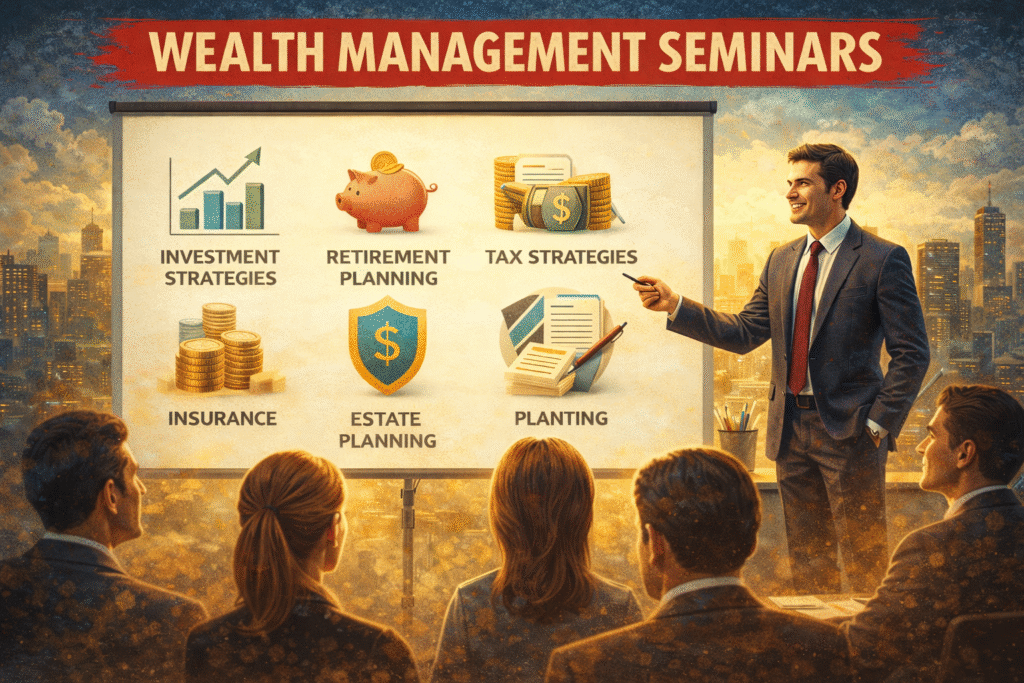
These seminars may cover topics such as:
- Personal financial planning
- Investment strategies
- Risk management
- Retirement planning
- Tax efficiency
- Estate and legacy planning
They can be delivered:
- In-person
- Online (webinars)
- Hybrid formats
The goal is simple: help participants make better financial decisions with confidence.
Who Should Attend Wealth Management Seminars?
Wealth management seminars are valuable for a wide range of audiences:
Individuals and Families
- Professionals building long-term wealth
- Parents planning education funds
- Pre-retirees preparing income strategies
- Retirees protecting accumulated assets
Business Owners and Entrepreneurs
- Cash flow and capital management
- Business succession planning
- Tax optimization strategies
- Investment diversification beyond the business
High-Net-Worth Individuals
- Advanced portfolio management
- Estate planning
- Asset protection
- Philanthropy strategies
Core Benefits of Wealth Management Seminars
1. Financial Education and Awareness
Many financial mistakes stem from lack of knowledge.
Seminars:
- Explain complex topics in simple language
- Provide structured learning
- Correct common misconceptions
Education is the foundation of financial security.
2. Clear Financial Roadmaps
Participants gain:
- Goal-setting frameworks
- Step-by-step strategies
- Actionable financial plans
This clarity reduces anxiety and decision paralysis.
3. Access to Expert Insights
Seminars are often led by:
- Certified financial planners
- Investment professionals
- Tax specialists
- Estate planning experts
Learning directly from professionals saves time and costly trial-and-error.
4. Improved Financial Discipline
Understanding why strategies work builds commitment.
Attendees are more likely to:
- Stick to investment plans
- Avoid emotional decisions
- Stay focused during market volatility
Key Topics Covered in Wealth Management Seminars
Personal Financial Foundations
- Budgeting and cash flow management
- Emergency funds
- Debt management strategies
A strong foundation supports long-term success.
Investment Strategies
Common investment topics include:
- Asset allocation
- Diversification
- Stocks, bonds, and funds
- Real estate investing
- Risk-return tradeoffs
Seminars emphasize long-term strategy over speculation.
Retirement Planning
Retirement sessions often focus on:
- Income replacement strategies
- Withdrawal planning
- Inflation protection
- Longevity risk management
Participants learn how to transition from accumulation to sustainability.
Risk Management and Insurance
Wealth protection is as important as wealth creation.
Topics may include:
- Life insurance planning
- Health and disability coverage
- Asset protection strategies
Insurance is positioned as protection, not profit.
Tax Efficiency and Optimization
Smart tax planning increases net returns.
Seminars explain:
- Tax-efficient investing
- Capital gains strategies
- Retirement account optimization
- Legal tax reduction methods
Estate and Legacy Planning
Advanced seminars cover:
- Wills and trusts
- Wealth transfer strategies
- Beneficiary planning
- Philanthropy and charitable giving
This ensures wealth benefits future generations.
How Wealth Management Seminars Build Financial Confidence
Confidence comes from understanding.
After attending a seminar, participants:
- Feel more in control of their finances
- Ask better questions
- Make decisions with intention
- Reduce fear around investing
Financial confidence leads to better long-term outcomes.
Wealth Management Seminars as a Business Tool
For financial professionals, seminars are more than education—they are relationship-building platforms.
Lead Generation and Client Trust
Seminars:
- Attract qualified prospects
- Demonstrate expertise
- Build credibility without hard selling
Education-first marketing creates long-term trust.
Client Retention and Engagement
Existing clients benefit from:
- Ongoing education
- Market updates
- Strategy reinforcement
Educated clients are more loyal and less reactive.
Brand Authority and Thought Leadership
Hosting seminars positions firms as:
- Industry leaders
- Trusted advisors
- Long-term partners
This authority compounds over time.
In-Person vs Online Wealth Management Seminars
In-Person Seminars
Pros:
- Strong personal connection
- Interactive discussions
- Higher engagement
Cons:
- Higher costs
- Limited reach
Online Seminars (Webinars)
Pros:
- Scalable
- Lower cost
- Global audience
Cons:
- Requires strong digital engagement strategies
Many firms use hybrid models for maximum impact.
Designing an Effective Wealth Management Seminar
A successful seminar focuses on value, clarity, and structure.
Key elements include:
- Clear learning objectives
- Logical content flow
- Practical examples
- Real-life case studies
- Actionable takeaways
Avoid overwhelming participants with unnecessary complexity.
Common Mistakes to Avoid in Wealth Seminars
- Over-selling products
- Using excessive technical jargon
- Ignoring audience experience level
- Lack of follow-up materials
Education builds trust. Sales should be secondary.
Measuring the Success of Wealth Management Seminars
Success can be measured by:
- Attendance rates
- Engagement levels
- Feedback surveys
- Follow-up consultations
- Client conversion and retention
Long-term impact matters more than immediate sales.
Future Trends in Wealth Management Seminars
The future of wealth education includes:
- Personalized financial education
- AI-driven insights
- On-demand learning platforms
- Interactive financial simulations
Technology will enhance—not replace—human guidance.
Why Wealth Management Seminars Are a Long-Term Investment
Wealth management seminars create value on multiple levels:
- For individuals seeking clarity
- For families planning the future
- For professionals building trust-based businesses
Education compounds just like wealth.
Conclusion: Education Is the Foundation of Financial Freedom
Wealth management seminars are not about predicting markets or selling products.
They are about:
- Empowering informed decisions
- Building confidence
- Creating sustainable financial systems
In a world full of financial noise, structured education is a competitive advantage.
Those who invest in learning—either by attending or hosting wealth management seminars—position themselves for long-term financial success.
Word Count:
294
Summary:
One strategy recently discussed in a wealth management seminar I attended was using the equity in your primary residence as an investment vehicle and asset protection play, however, it is a risky proposition.
Keywords:
investing, wealth management, private banking
Article Body:
When selecting a wealth management seminar, you should look for smaller size classes containing 25 people or less. Topics should include estate planning, financial planning, retirement plans for small businesses and the self-employed, savings and investing for retirement, understanding your 401(k) and employer fiduciary responsibility. Investing in times of trouble and economic market outlook are among other topics that should be covered.
One strategy recently discussed in a wealth management seminar I attended was using the equity in your primary residence as an investment vehicle and asset protection play, however, it is a risky proposition.
Here are the details, you take out a low interest mortgage on your home, you then you invest the proceeds in investments that are protected from creditors. This achieves a few things, first, this keeps creditors from viewing the house as an easy target for legal judgments personally as the home has very little equity due to the mortgage.
And secondly, let�s assume you were able to acquire a mortgage at 6% interest. If your investments return 9%, you are ahead 3%. But don�t make the mistake of taking out an adjustable rate mortgage because you may find yourself losing equity and investment dollars at the same time.
The largest risk you face cashing out all of the equity in your home is what happens if you lose money in all or most of your investments? What if your investment return doesn�t cover the payment on the mortgage and with your creditors decide to take your investments rather than your house?
While the cash out mortgage programs are a good deal, you should consider talking to an attorney about the state laws protecting your home and a certified financial planner about ways to boost investments to cover the mortgage payments.




Tinggalkan Balasan